


Occupational therapy for Attention Deficit Hyperactivity Disorder (ADHD) children focuses on helping with their day-to-day activities, like playing, studying, or public interactions.
Generally, for 4–7-year-old children with ADHD, the challenges are poor emotional control, stubborn behaviour, difficulty in maintaining simple body posture while sitting, and weak response timing, along with weak executive functioning.
To overcome these shortcomings, occupational therapies are best and can be easily performed by parents at home in simple homely settings. Occupational therapy for ADHD is designed to effectively cater to the needs of ADHD children. But you need to keep in mind a few factors before starting with occupational therapy.
A few points to keep in mind before starting occupational therapy:
- Always take short sessions (10–15 minutes)
- Make sure the sessions are fun and stop before the child starts getting frustrated
- Offer choices for teaching self-regulation in an ADHD child
- Cheer small efforts and achievements; don’t look for perfection
- Pair movements with calming inputs (deep pressure, oral input, linear movements)
Evidence-Based Home Activities – Paired with Goal
The best time and place to start occupational training is as early as the detection of ADHD signs, and the best setting is under the supervision of parents at home to make children accustomed to the slight changes.
Calming & Organising Activities (for hyperactivity and sensory overload)
- Wall Push-Ups or Chair Push-Ups: Child stands and pushes against the wall (or sits and pushes up from the chair) for 10–20 reps. Provides proprioceptive input that calms the nervous system in 60–90 seconds.
- Tug of War: Pulling both ends of a rope, one side by parents/caregivers and the other by the child. Improves physical strength.
- DIY Blanket Swing: Wrap the child in a blanket and gently rock side-to-side (no spinning). Linear movement is organising and often leads to a “quiet alert” state within 5–10 minutes.
- Steamroller Game: Child lies on tummy while the parent rolls a therapy ball or firm pillow from toes to shoulders with steady pressure. Helps reduce meltdown behaviour.
- Chewy Tube or Crunchy Snack: Offer chewy necklaces, sugar-free gum, carrot sticks, or bagels before seated tasks. Oral-motor input is highly regulating.
Heavy Work Activities
- Animal Walks / Balance Beam Walk: Bear walk, crab walk, frog jumps, inchworm walks, or taped floor paths to walk back and forth. Enhances motor reflexes.
- Little Helper: Carry laundry baskets, push grocery carts, clean garden litter, shovel sand, or wipe tables. Heavy work should feel effortful but not exhausting.
- Theraband “Row Row Row Your Boat”: Tie a long exercise band to a doorknob. The child sits and pulls while singing. Helpful before homework.
- Play-Dough Workouts: Squeezing, rolling, and shaping dough strengthens hand stability and motor skills.
Fine-Motor & Handwriting Support
- Squeeze & Spray Bottle Activities: Use spray bottles to water plants or wash windows. Strengthens hand muscles needed for pencil grasp.
- Clothes-Pin Activity: Use clothespins to pick up objects, match colours, or clip onto lines. Improves finger strength and coordination.
- Bead or Sticker Lines: Thread beads or place stickers along drawn lines to build precision and sustained attention.
- Vertical Surface Work: Tape paper to a wall or use an easel. Improves wrist extension, shoulder stability, and handwriting.
Executive Function & Emotional Regulation Games
- Simon Says (with a twist): Follow commands only when they include heavy work. Teaches inhibitory control.
- Freeze Dance: Dance to music and freeze when it stops. Improves impulse control.
- Colour-Coded Regulation: Use red, yellow, and green cards to guide behaviour and emotional expression.
Outdoor physical activities are also beneficial for overall development.
Also Read: 15 Best Outdoor Activities for ADHD Children: Fun, Focused & Active Play Ideas
Sample Daily “Sensory Diet” for a 5-Year-Old with ADHD
- Wake-up: 2 minutes blanket burrito roll + crunchy cereal
- Before preschool: 5–10 wall push-ups
- After school: 5–10 minute obstacle course
- Before homework: Spray bottle cleaning + vertical drawing
- Mid-homework break: Steamroller or lycra swing
- Before dinner: Carry groceries or help in kitchen
- Bedtime: Deep-pressure massage + weighted blanket
When to Seek a Formal OT Evaluation
- Cannot sit for 3–5 minutes without disruptive behaviour
- Extreme picky eating or gagging on textures
- Frequent meltdowns lasting more than 20 minutes
- Illegible handwriting causing distress by age 6–7
- Crashing into furniture or breaking toys
- Difficulty zipping jackets or fastening buttons by age 6
Parent Mindset Tips
- You are meeting a neurological need, not giving in.
- A calm parent leads to a calmer child.
- Track small wins daily.
- Collaborate with school occupational therapists.
Conclusion
You’ve got this — one wall push-up, one animal walk, one regulated day at a time.
Children with ADHD are not misbehaving on purpose. Occupational therapy activities help them regulate emotions, focus better, and gain independence. With consistent home-based therapy, most children show measurable improvements within 6–12 weeks.
For professional guidance, connect with us at RDCC Healthcare in Vadodara, where our experts support your child’s emotional and physical development.
FAQs – Frequently Asked Questions
How Occupational Therapy Helps Young Children with ADHD?
Occupational therapy for Attention Deficit Hyperactivity Disorder (ADHD) children focuses on helping with their day-to-day activities, like playing, studying, or public interactions.
Can occupational therapies be performed at home under the supervision of parents?
Yes, occupational therapies are simple tasks/activities designed to help autistic children overcome their difficulties, and thus they are best performed in the presence of parents because it’s the place and people where the child feels most secure.
Are heavy-duty exercises and activities a good option for occupational therapy?
Yes, if performed under parental supervision, and focusing more on gaining physical strength, because more physically exhausting games develop stronger motor reflexes.
What is pediatric occupational therapy for ADHD?
Pediatric occupational therapy for ADHD helps children improve daily functional skills such as sitting tolerance, emotional regulation, fine-motor control, self-care and classroom participation. It focuses on sensory processing, motor planning and executive functioning rather than behaviour correction alone.

RDCC Healthcare
Related Posts

Effects of Poor Sleep on Health, Mental Well-Being, and Productivity
Sleep is one of the most important foundations of good health, yet it is often…
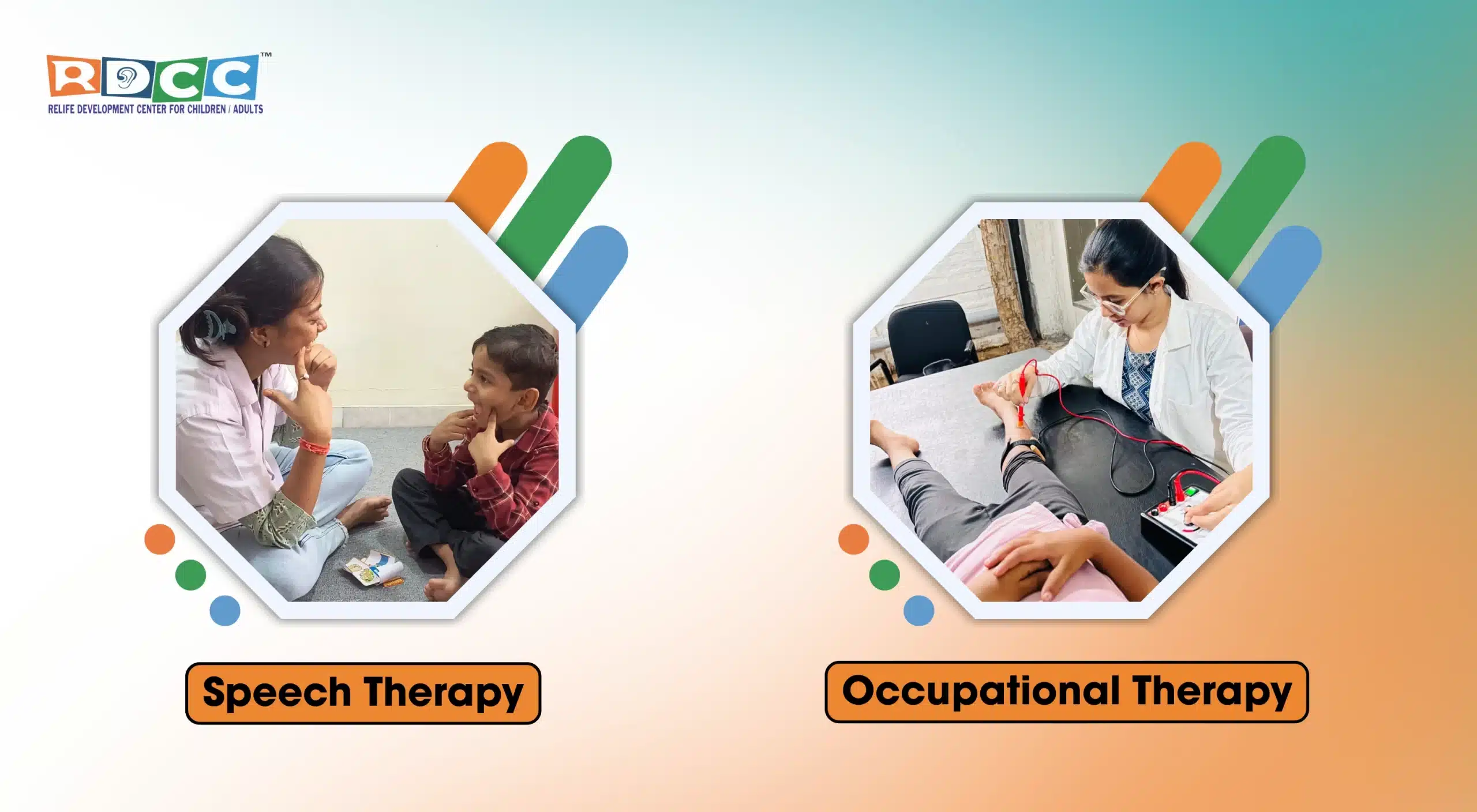
The Difference Between Speech Therapy and Occupational Therapy
Speech therapy and occupational therapy are different but complementary to each other. They are designed…


