

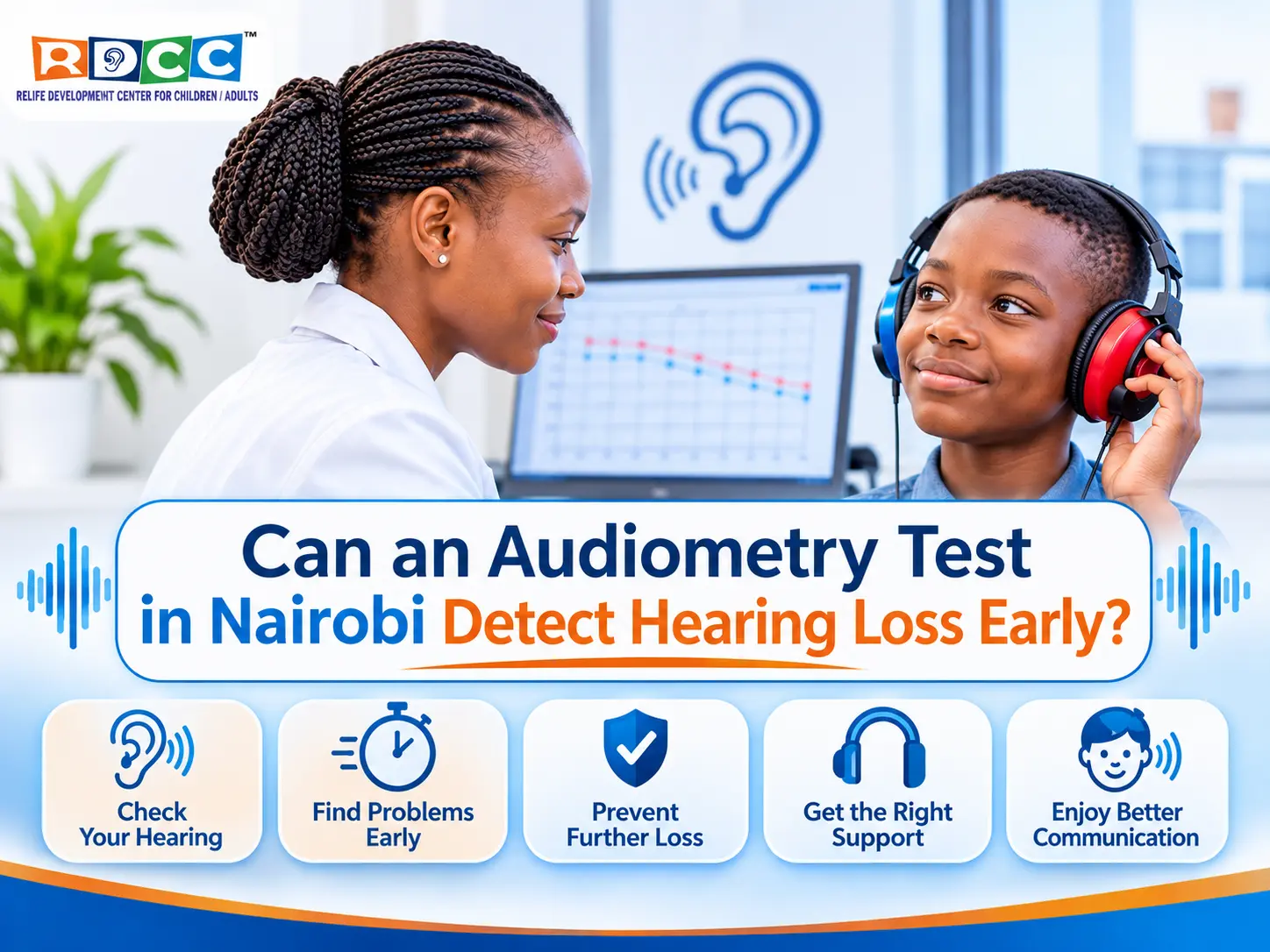
Have you ever found yourself asking people to repeat what they said? Do you struggle to follow conversations when several people are talking, or feel that your television volume is always too low for others? These situations may seem small, but sometimes they can be early signs of hearing difficulties.
Hearing loss does not always happen suddenly. In many cases, it develops gradually, making it difficult to notice the changes. You may continue with your daily routine without realising that you are missing certain sounds or words. This is why a hearing assessment can be helpful.
An Audiometry Test in Nairobi, Kenya can help identify hearing difficulties, measure how well you hear different sounds and provide useful information about your hearing health. Whether you are concerned about your own hearing or your child’s response to sounds, understanding the testing process is a good first step.
At RDCC Healthcare in Nairobi, Kenya, audiology services support children and adults with hearing assessments and guidance based on their individual needs.
What Is an Audiometry Test?
An audiometry test is a hearing assessment that measures how well a person can hear sounds at different frequencies and volumes. It helps an audiologist understand whether someone has hearing difficulties and, if so, how significant they may be.
During a typical pure-tone audiometry test, you may be asked to wear headphones and listen to different sounds. Whenever you hear a sound, you respond by pressing a button, raising your hand or following the audiologist’s instructions.
The results are recorded on a chart called an audiogram. This chart helps show the softest sounds you can hear at different frequencies.
An audiometry test may help identify:
-
Mild, moderate or more significant hearing loss.
-
Difficulty hearing high- or low-pitched sounds.
-
Hearing differences between the two ears.
-
Hearing difficulties that may need further evaluation.
The assessment is generally painless and non-invasive.
Can an Audiometry Test Detect Hearing Loss Early?
Yes. An audiometry test can identify hearing difficulties before they become obvious in everyday conversations. Some people can hear normal sounds but struggle to understand speech, particularly in noisy environments.
For example, you may hear someone speaking but miss certain words. You might also find it difficult to follow conversations in a restaurant, workplace, classroom or busy public area.
Early hearing assessment can help identify these difficulties and guide the next steps. However, the test alone may not explain the underlying cause of hearing loss. Additional assessments or medical evaluation may sometimes be needed.
What Are the Early Signs of Hearing Loss?
Many people in Nairobi and elsewhere do not immediately recognise changes in their hearing. Instead, they may adjust their daily habits without realising why.
Here are some common signs worth paying attention to:
1. Frequently Asking People to Repeat Themselves
Do you often say, “Sorry, what did you say?” even when someone is speaking directly to you? Difficulty understanding everyday conversations may be an early indication of hearing problems.
2. Increasing the Television or Phone Volume
If you regularly increase the volume while others find it too loud, it may be worth checking your hearing.
3. Struggling to Hear in Noisy Places
Restaurants, shopping centres, offices and busy streets can make conversations difficult. However, consistently struggling more than others may indicate hearing difficulties.
4. Missing Certain Words or Sounds
You may hear someone talking but fail to understand specific words, especially when they speak softly or quickly.
5. Ringing or Buzzing in the Ears
Some people experience ringing, buzzing or humming sounds without an external source. This is known as tinnitus and may occur alongside hearing loss, although it does not always mean hearing loss is present.
6. Difficulty Following Phone Conversations
Phone calls can become challenging because you cannot rely on facial expressions or lip movements to understand the speaker.
If you notice these changes regularly, consider arranging a hearing assessment.
Why Is Hearing Testing Important for Children?
Hearing plays an important role in a child’s speech, language, learning and social development. Children learn many communication skills by listening to parents, teachers and people around them.
Sometimes, hearing difficulties may be mistaken for behavioural or learning concerns. For example, a child may not respond when called, frequently ask for instructions to be repeated or struggle to follow classroom conversations.
Parents should consider a hearing assessment if they notice:
-
The child does not respond consistently when called by name.
-
Speech development seems slower than expected.
-
The child frequently asks others to repeat instructions.
-
The child struggles to follow conversations.
-
The child prefers higher television or device volume.
-
The child appears to hear some sounds but misses others.
An audiometry test or another age-appropriate hearing assessment can help identify possible hearing difficulties. The appropriate test depends on the child’s age, ability to follow instructions and developmental needs.
Early identification can help families understand whether additional hearing support or professional guidance is needed.
What Happens During an Audiometry Test in Nairobi?
If you have never had a hearing test before, you may wonder what happens during the appointment. The process is generally straightforward and does not require complicated preparation.
Here is what you can typically expect:
Step 1: Understanding Your Hearing Concerns
The audiologist may ask about your hearing difficulties, medical history, exposure to loud sounds, ear infections and any symptoms you have noticed.
For children, parents may be asked about speech development, responses to sounds and communication milestones.
Step 2: Initial Ear Examination
An examination of the ears may be recommended to check for visible concerns, such as earwax buildup or other conditions that could affect hearing.
Step 3: Listening to Different Sounds
During pure-tone audiometry, you may wear headphones and listen to sounds at different pitches and volumes. You will be asked to respond whenever you hear a sound.
Step 4: Recording the Results
Your responses are recorded on an audiogram. This provides a visual picture of your hearing ability across different frequencies.
Step 5: Understanding the Results
The audiologist explains the findings and discusses whether further testing, monitoring, medical evaluation or hearing support may be appropriate.
The exact testing process can vary depending on the individual’s age and hearing concerns.
What Do Audiometry Test Results Mean?
After your hearing assessment, you may receive an audiogram. If you are unfamiliar with this chart, the results can seem confusing at first.
An audiogram shows the quietest sounds you can hear at different frequencies. The results are generally used to describe hearing ability as follows:
| Hearing level | General description |
|---|---|
| Normal | No significant hearing loss detected |
| Mild hearing loss | Difficulty hearing some softer sounds |
| Moderate hearing loss | Difficulty following speech, especially in challenging environments |
| Severe hearing loss | Difficulty hearing many everyday sounds |
| Profound hearing loss | Very limited ability to hear sounds |
These categories are general descriptions. Your audiologist should explain what your individual results mean and whether additional assessment is required.
What Causes Hearing Loss?
Hearing difficulties can develop for several reasons. Some causes are temporary, while others may require ongoing management.
Common factors include:
1. Ear infections: Certain ear infections can affect hearing, particularly when fluid builds up in the middle ear.
2. Age-related changes: Hearing ability may gradually decrease as people grow older.
3. Exposure to loud noise: Regular exposure to loud music, machinery, construction noise or other high-volume sounds can damage hearing.
4. Earwax buildup: Excessive earwax can block the ear canal and affect sound transmission.
5. Family history: Some types of hearing loss may be associated with inherited factors.
6. Certain medical conditions or medications: Some illnesses and medicines can affect hearing.
7. Birth-related factors: Some children are born with hearing difficulties or develop them during early childhood.
Because hearing loss has different possible causes, professional assessment is important before deciding on treatment or management.
What Should You Do After a Hearing Test?
The next step depends on your test results and the reason for your hearing difficulties.
If your hearing is within the expected range, your audiologist may recommend routine monitoring if you have ongoing concerns.
If hearing loss is identified, possible next steps may include:
-
Further hearing assessments to understand the type and extent of hearing loss.
-
Referral to an ENT specialist when medical evaluation is needed.
-
Hearing aids when suitable for your hearing needs.
-
Communication and listening support.
-
Follow-up assessments to monitor changes in hearing.
Not every person with hearing loss needs the same solution. The right recommendation depends on the cause, severity, lifestyle and individual requirements.
How Can You Take Care of Your Hearing?
Although not all hearing loss can be prevented, everyday habits can help protect your hearing.
-
Keep headphone and earphone volumes at comfortable levels.
-
Take listening breaks when using headphones for extended periods.
-
Use appropriate hearing protection around loud machinery.
-
Avoid inserting cotton buds or other objects deep into your ears.
-
Seek professional advice for persistent ear pain, discharge or changes in hearing.
-
Consider hearing assessments if you notice changes in your ability to hear.
If you experience sudden hearing loss, seek urgent medical attention rather than waiting for a routine hearing appointment.
Where Can You Get an Audiometry Test in Nairobi, Kenya?
If you are concerned about hearing changes in yourself or your child, finding the right audiology support is an important step.
RDCC Healthcare in Nairobi, Kenya, provides audiology services for children and adults. The centre also offers services including Speech Therapy, Occupational Therapy, ABA Therapy, Hearing Aids, Voice Therapy and Swallowing Therapy.
Understanding hearing concerns early can help families make informed decisions about communication, learning and everyday life. Whether you are looking for a hearing assessment for your child or checking changes in your own hearing, professional guidance can help you understand the available options.
If you are searching for an Audiometry Test in Nairobi, RDCC Healthcare can help you take the next step towards understanding your hearing needs.
Frequently Asked Questions
1. How much does an audiometry test cost in Nairobi, Kenya?
The cost depends on the type of hearing assessment, the testing requirements and the service provider. Contact the centre directly to confirm the current price before your appointment.
2. Is an audiometry test painful?
No. A standard pure-tone audiometry test is painless and non-invasive. You simply listen to sounds through headphones and respond when you hear them.
3. How long does an audiometry test take?
A basic hearing assessment commonly takes around 15–30 minutes. The duration may vary depending on the tests required and the person’s age.
4. Can an audiometry test detect mild hearing loss?
Yes. Audiometry can identify mild hearing loss by measuring the quietest sounds a person can hear at different frequencies.
5. Can children undergo an audiometry test?
Yes. Children can have hearing assessments using age-appropriate testing methods. Early hearing assessment can be particularly helpful when parents have concerns about speech or language development.
6. Do I need an audiometry test if I can hear normally?
You may benefit from a hearing assessment if you frequently miss words, struggle with conversations in noisy places or notice changes in your hearing. Some hearing difficulties are not immediately obvious.
7. Where can I get an audiometry test in Nairobi?
RDCC Healthcare offers audiology services in Nairobi, Kenya, for children and adults. You can enquire about the appropriate hearing assessment based on your needs.

Related Posts
Top 10 Audiologist in Vadodara
Looking for the right audiologist in Vadodara but not sure where to start? This guide…
Top 5 Audiologist in Godhra
Hearing difficulties can affect how a person communicates, learns, and participates in everyday activities. If…



