


If a child is not talking at 4, you may be concerned and stressed about the speech delay issues in a 4-year-old. The frequency of speech and language development varies widely, but by the age of 4, most children can speak in clear but small sentences, express their thoughts, and engage in small and simple conversations. If your 4-year-old is not speaking clearly or doesn’t talk in sentences, it can be an indication of speech delay in children, which can also be linked with other behavioural problems.
Here’s a comprehensive guide to understand the reasons for speech delay, early signs to watch for, and steps to be taken to support your child.
What Is Speech Delay?
If your 4-year-old is not speaking or struggling significantly in communication, it could be due to a speech and language delay. Some children can understand the language but they struggle to express themselves, while some children can have issues in both understanding as well as expressing themselves.
A speech and language delay occurs when a 4-year-old lags behind typical developmental milestones. By age 4, children typically: Use 4-5 word sentences, Are understood by strangers most of the time, Ask and answer simple questions, Use pronouns (e.g., “I,” “you”) correctly.
At what Age Should a Child Start Talking Clearly?
Most children begin speaking clearly between ages 2 and 3, with significantly noticeable improvements by age 4, as outlined in the speech and language milestones by age 4 provided by the CDC.
By 4, a child’s speech should be comprehensible to unfamiliar listeners, though minor articulation errors (e.g., lisping), rhotacism (difficulty with ‘r’ sounds) or sigmatism (difficulty with ‘s’ and ‘z’ sounds), or lambdacism (difficulty with ‘I’ sound) are normal. But if your 4-year-old doesn’t talk in sentences or it is difficult to understand their words, it’s worth investigating further.
Reasons for Speech Delay in 4-Year-Old
Many factors contribute to speech delay in a 4-year-old child; understanding them and timely intervention are important to solve this issue.
- Bilingualism: Learning multiple languages can sometimes slow verbal output, though this is usually temporary and gets resolved with age.
- Developmental Disorders: Conditions like autism spectrum disorder (ASD) or developmental language disorder (DLD) may cause delays.
- Behavioural or Emotional Issues: Stress or selective mutism may contribute to the 4-year-old’s speech delay and behavioural problems.
- Oral-Motor Problems: Issues with the mouth or tongue muscles can affect articulation.
- Environmental Factors: Limited exposure to language or social interactions can slow speech development.
- Hearing Issues: Undiagnosed hearing loss, often due to ear infections, can obstruct speech development.
- Neurological Conditions: Conditions like apraxia (difficulty with skilled movements) of speech affect the brain’s ability to coordinate speech movements. Understanding how speech therapy can help kids with these neurological and speech coordination issues can provide valuable insight.
If your son/daughter doesn’t start speaking properly at 4 years of age, it doesn’t necessarily mean there is a major problem. It can be a timely issue and can be solved with proper professional interventions.
Signs of Speech Delay in 4-Year-Olds
Understanding and identifying speech delay involves monitoring your child’s communication. Some common and frequently shown signs can be:
- Lack of social communication: Not engaging in back-and-forth conversations or asking counter questions.
- Unclear speech: Difficulty being understood by unfamiliar listeners.
- Finite vocabulary: often using fewer words than his peers (ideally, a 4-year-old knows approximately 1500-1600 words).
- Difficulty in forming simple sentences: when a child often struggles to frame words into more coherent sentences (e.g., communicating in only single words or short phrases, or fumbling with common words).
- Trouble following directions: Struggling to understand or respond to simple instructions.
- Infuriated during communication: gets angry or irritated quickly when trying to express needs or thoughts.
If all these signs are observed, then it doesn’t necessarily mean that there is a severe problem, but early and timely professional evaluation can provide clarity.
Speech Delay and Behaviour Problems
A 4-year-old’s speech delay can at times lead to several behavioural problems. When your child struggles to express their thoughts and needs, they become irritated and frustrated, which can lead to throwing tantrums, withdrawal syndrome, and aggression. Addressing these issues on time with proper professional help and guidance can often improve these behaviours.
What You Can Do: Some Practical Steps for Parents
In case you’re stressed about your 4-year-old’s speaking and speech issues, you can take the following steps:
Replicate Clear Speech:
- Speak slowly and clearly, emphasising words your child struggles with.
- Repeat and expand on what they say, for example – if they say ‘cat’, you can respond with ‘Yes, the black cat is running’.
Ensure and Encourage Clear Communication at Home:
- Sing songs or play rhyming games to make language more fun.
- You can also try specific speech therapy activities for cluttering and articulation improvement to make these exercises more engaging.
- Read books together to build vocabulary and comprehension.
- Engage in daily conversations, ask open-ended back and forth questions like “What did you see at the zoo?” or “What did you do when someone said hi?”
Limited Screen Time:
- Excessive screen use can drastically reduce opportunities for verbal interaction. Paediatrics recommends not more than 1 hour of quality screen time daily for 4-year-olds.
Seek Professional Evaluation:
- A paediatrician can check for hearing issues or other medical causes.
- An SLP can assess speech and language skills and recommend therapy if needed.
Create a More Language-Rich Environment:
- Rehearse daily activities (e.g., “We’re watering the plum trees now”).
- Play interactive games and puzzles like “charades” or “hopscotch” to encourage descriptive language.
Consider Early Intervention Programs:
- Low-cost early intervention services are available for children under 5. These may include speech therapy or developmental support.
When to Seek Professional Help if Your Child is Not Talking
If you observe that your 4-year-old child still doesn’t talk in clear sentences or even shows other signs of delay, don’t wait any further and get early professional help because early intervention is critical, and addressing speech delay issues before the child turns 5 is easier.
You can also contact our professional speech therapists if:
- Your child’s speech is mostly incomprehensible and unclear.
- The child shows clear signs of irritation and gets annoyed and frustrated if struggling to communicate.
- The child uses fewer words and gets stuck even at easy words.
Success Stories: A Hope for Late Talkers
Many parents worry. Many parents are concerned that “My child started talking at 4—is this normal?” Yes, some children are late talkers, but they catch up with intervention. There are many famous personalities who faced similar issues during their childhood but later excelled in life.
For example, Einstein famously spoke late but thrived with support. So we can say that with therapy, parental involvement, and patience, many 4-year-olds with speech delays make significant progress.
Speech Therapy: What to Expect from Our Speech Therapy
If a Speech-Language-Pathologist (SLP) recommends therapy, you can reach out to us. Our speech and language therapy sessions include:
- Remedial education: personalised attention with continuous encouragement helps children in overcoming issues like speech delay.
- Parent coaching: teaching parents strategies to support their child with language at home.
- Play-based activities: using puzzles, games, or toys to encourage speech in a child.
- Pronunciation exercises: focusing on the pronunciation of specific words and sounds.
Therapy frequency varies according to the severity of issues, and thus, weekly or biweekly sessions according to the progress of the child’s speaking improvement can be arranged.
Conclusion
Continuously monitoring your child’s communication, by understanding the reasons behind speech delay, identifying signs, and seeking professional guidance and help, you can support your child’s communication journey. A speech delay in a 4-year-old can be unsettling, but early interventions can make a big change.
If you’re wondering, at what age should a child start speaking clearly? Or if you notice speech delay problems, then act promptly. Because with the right strategies, your child can develop the skill to express themselves more clearly and confidently.
Frequently Asked Questions
Common signs include limited vocabulary, difficulty in forming sentences, and unclear pronunciation.
Some variations can be normal in speech development, but a 4-year-old should typically be able to form short sentences with clear, understandable words, so if your child is not talking at 4, a speech-language evaluation is recommended
Hearing problems, developmental disorders like Autism, or oral-motor issues, or sometimes a combination of factors, result in speech delay.
Yes, with early interventions followed by diagnosis paired with consistent speech therapy, most children show significant improvements.
No, growing up learning two languages doesn’t cause speech delay. Children learning two or more languages may take a bit longer to separate the vocabulary, but they usually catch up pretty fast with consistent exposure.

Related Posts

Effects of Poor Sleep on Health, Mental Well-Being, and Productivity
Sleep is one of the most important foundations of good health, yet it is often…
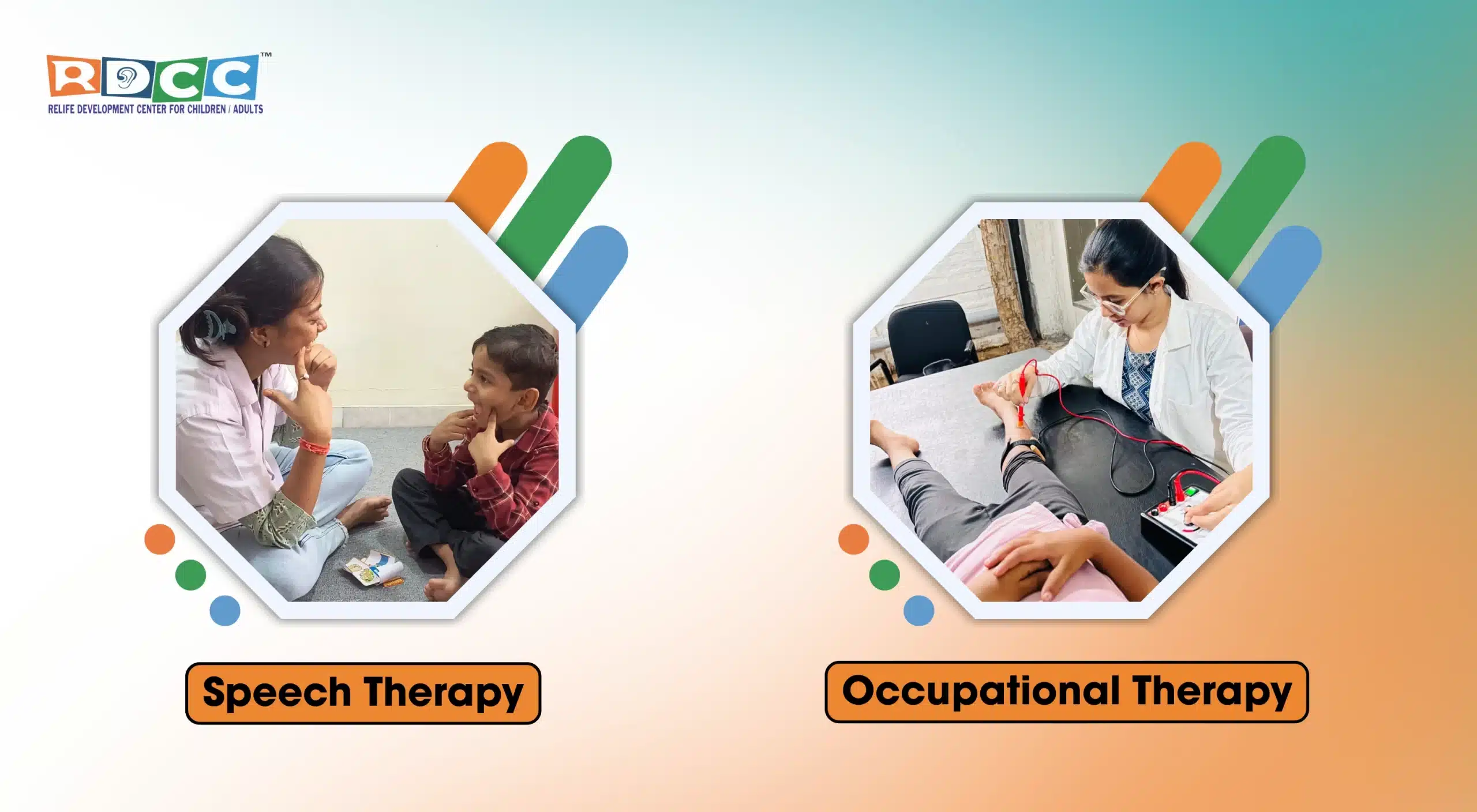
The Difference Between Speech Therapy and Occupational Therapy
Speech therapy and occupational therapy are different but complementary to each other. They are designed…


