

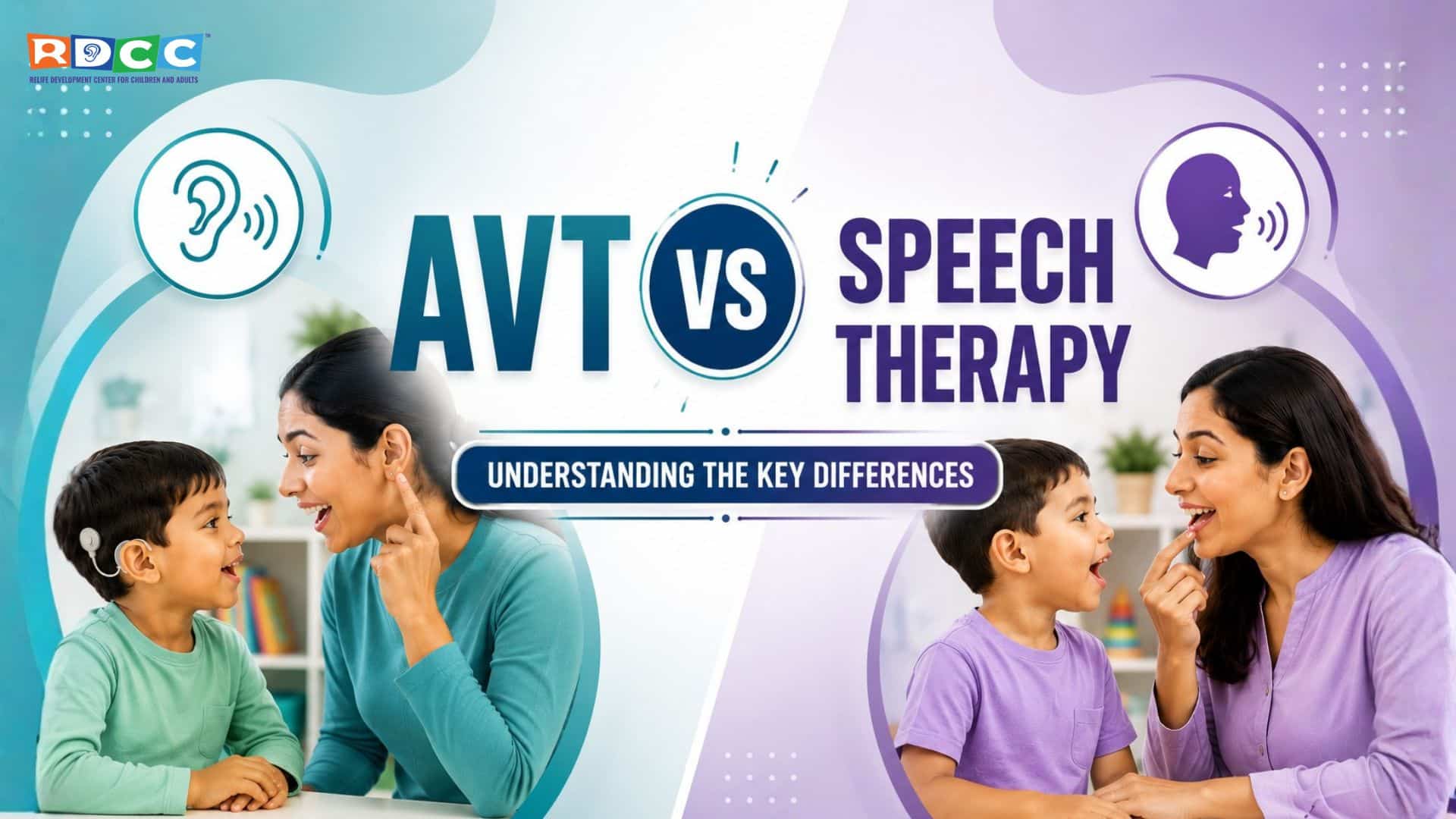
Children develop communication skills in different ways, and for children with hearing loss, choosing the right therapy can significantly impact their language and speech development. Parents are often introduced to two common options: Auditory Verbal Therapy (AVT) and traditional Speech Therapy. While both approaches aim to improve communication, they differ in their methods, goals, and outcomes.
Understanding these differences can help parents make informed decisions about their child’s hearing and language development journey. In this guide, we explore AVT vs Speech Therapy, how each approach works, and which may be most suitable for your child’s needs.
What Is Auditory Verbal Therapy (AVT)?
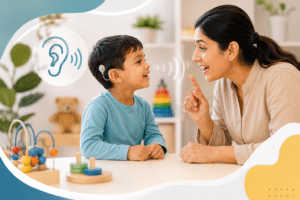
Auditory Verbal Therapy (AVT) is a specialized, evidence-based intervention designed for children with hearing loss. The primary goal of AVT is to teach children to listen and communicate through spoken language by maximizing the use of their residual hearing.
Children undergoing AVT typically use hearing aids or cochlear implants and are encouraged to rely on listening rather than visual cues such as lip-reading or sign language. Therapy sessions focus on developing auditory skills that help children understand sounds, words, and conversations naturally.
AVT also places strong emphasis on parent involvement. Parents learn techniques that can be integrated into everyday routines, creating continuous learning opportunities outside therapy sessions.
What Is Speech Therapy?
Speech Therapy is a broader field that helps individuals improve communication skills. It addresses challenges related to speech production, language development, voice quality, fluency, articulation, and social communication.
Children may require speech therapy for a variety of reasons, including:
- Speech sound disorders
- Articulation difficulties
- Language delays
- Stuttering
- Voice disorders
- Developmental conditions
Unlike AVT, traditional speech therapy does not specifically focus on hearing loss. Instead, therapists use a variety of methods and tools to improve communication abilities based on the child’s unique needs.
The Main Goal of AVT
The central objective of Auditory Verbal Therapy is to help children with hearing loss develop spoken language through listening.
AVT focuses on:
- Developing auditory awareness
- Improving listening skills
- Building receptive language
- Enhancing expressive language
- Supporting age-appropriate speech development
- Promoting mainstream educational participation
The therapy is designed to help children learn language similarly to how children with typical hearing develop communication skills.
The Main Goal of Speech Therapy
Speech Therapy focuses on improving overall communication abilities.
Depending on the child’s diagnosis, therapy may target:
- Correct pronunciation of sounds
- Vocabulary development
- Sentence formation
- Fluency improvement
- Voice control
- Social communication skills
Speech therapy is highly adaptable and can be used for children and adults with various communication challenges.
AVT vs Speech Therapy: Key Differences
1. Target Audience
AVT
AVT is specifically designed for children with hearing loss who use hearing technology such as hearing aids or cochlear implants.
Speech Therapy
Speech therapy serves a wider population, including individuals with speech delays, articulation disorders, language difficulties, neurological conditions, and developmental challenges.
2. Primary Focus
AVT
The focus is on developing listening skills and spoken language through hearing.
Speech Therapy
The focus is on improving communication skills, speech production, language development, and articulation.
3. Use of Visual Cues
AVT
AVT minimizes dependence on visual cues such as lip-reading or gestures. The goal is to strengthen auditory processing skills.
Speech Therapy
Visual aids, pictures, gestures, mirrors, and other supportive tools are commonly used to facilitate learning.
4. Role of Parents
AVT
Parents play an active and essential role in every therapy session. They learn strategies to reinforce listening and language development at home.
Speech Therapy
Parents are encouraged to support therapy goals, but involvement levels may vary depending on the treatment plan.
5. Therapy Approach
AVT
Sessions focus on integrating listening into daily life experiences and encouraging natural spoken communication.
Speech Therapy
Therapists may use structured exercises, games, repetition, articulation drills, and language activities tailored to specific communication goals.
6. Hearing Technology Integration
AVT
Hearing aids or cochlear implants are central components of therapy. Consistent device usage is critical for success.
Speech Therapy
Hearing devices may or may not be part of treatment, depending on the individual’s condition.
Which Therapy Is Better for Children With Hearing Loss?
The answer depends on the child’s specific needs.
For children with hearing loss who use hearing aids or cochlear implants, Auditory Verbal Therapy is often considered highly beneficial because it specifically focuses on listening and spoken language development.
However, some children may benefit from a combination of AVT and Speech Therapy. For example, a child may develop listening skills through AVT while receiving speech therapy to address articulation or pronunciation challenges.
A qualified audiologist and therapist can assess the child’s hearing, communication abilities, and developmental goals to recommend the most appropriate approach.
Benefits of Auditory Verbal Therapy
Children participating in AVT may experience several advantages:
- Improved listening skills
- Better spoken language development
- Enhanced communication confidence
- Increased academic readiness
- Greater independence in communication
- Strong family involvement
- Better integration into mainstream educational settings
Early intervention often leads to more successful outcomes.
Benefits of Speech Therapy
Speech Therapy offers a wide range of benefits, including:
- Clearer speech production
- Improved language comprehension
- Expanded vocabulary
- Enhanced social communication
- Better confidence in speaking situations
- Reduced communication frustrations
- Support for various speech and language disorders
These benefits can positively impact both academic performance and daily interactions.
When Should Parents Seek Professional Help?
Parents should consider professional evaluation if they notice:
- Delayed speech development
- Limited response to sounds
- Difficulty understanding instructions
- Unclear speech compared to peers
- Frequent requests for repetition
- Challenges in communication and language learning
Early diagnosis and intervention can significantly improve outcomes and support healthy language development.
How RDCC Healthcare Supports Children and Families
At RDCC Healthcare, our team is dedicated to helping children reach their full communication potential through comprehensive hearing and speech services. We provide professional assessments, hearing care solutions, and specialized therapy programs designed to meet each child’s individual needs.
Our experts work closely with families to create personalized treatment plans that support listening, speech, language, and overall communication development.
Whether your child requires Auditory Verbal Therapy, speech therapy, hearing aids, or ongoing hearing care support, our goal is to guide you every step of the way.
Conclusion
Understanding the differences between AVT and Speech Therapy is essential for making informed decisions about your child’s communication journey. While both therapies support language development, they serve different purposes and use distinct approaches.
Auditory Verbal Therapy focuses specifically on helping children with hearing loss develop listening and spoken language skills through the effective use of hearing technology. Speech Therapy, on the other hand, addresses a broader range of communication challenges.
Choosing the right therapy depends on your child’s unique needs, hearing abilities, and developmental goals. Seeking professional guidance can help ensure the best possible outcomes and support long-term communication success.
Frequently Asked Questions
1. What is the difference between AVT and Speech Therapy?
AVT focuses specifically on helping children with hearing loss develop listening and spoken language skills through hearing technology. Speech Therapy addresses a broader range of communication disorders, including articulation, language delays, and speech sound difficulties.
2. Is AVT only for children with hearing loss?
Yes. Auditory Verbal Therapy is primarily designed for children with hearing loss who use hearing aids or cochlear implants and want to develop spoken language through listening.
3. Can a child receive both AVT and Speech Therapy?
Yes. Some children benefit from a combination of both therapies. AVT can strengthen listening skills, while speech therapy can address articulation or language-related challenges.
4. At what age should AVT begin?
AVT is most effective when started as early as possible after hearing loss is identified. Early intervention supports better language and communication outcomes.
5. Do parents participate in AVT sessions?
Yes. Parent involvement is a core component of AVT. Parents learn practical strategies to support listening and language development at home.
6. Does Speech Therapy help children without hearing loss?
Absolutely. Speech Therapy is used for many communication disorders, including speech delays, stuttering, articulation problems, and language development difficulties.
7. How long does AVT take to show results?
Results vary depending on factors such as age, degree of hearing loss, consistency of therapy, and family involvement. Many children show gradual improvement over time with regular participation.
8. How can I determine which therapy is right for my child?
A professional evaluation by an audiologist and speech-language specialist can help identify your child’s specific needs and recommend the most suitable therapy approach.

Related Posts
Why Choose the Best Audiologist in Vadodara for Hearing Loss Treatment Options?
Hearing plays an important role in how we communicate, learn, work, and stay connected with…
Pure Tone Audiometry: Everything You Need to Know
Pure Tone Audiometry: Everything You Need to Know Hearing is one of our most important…






