

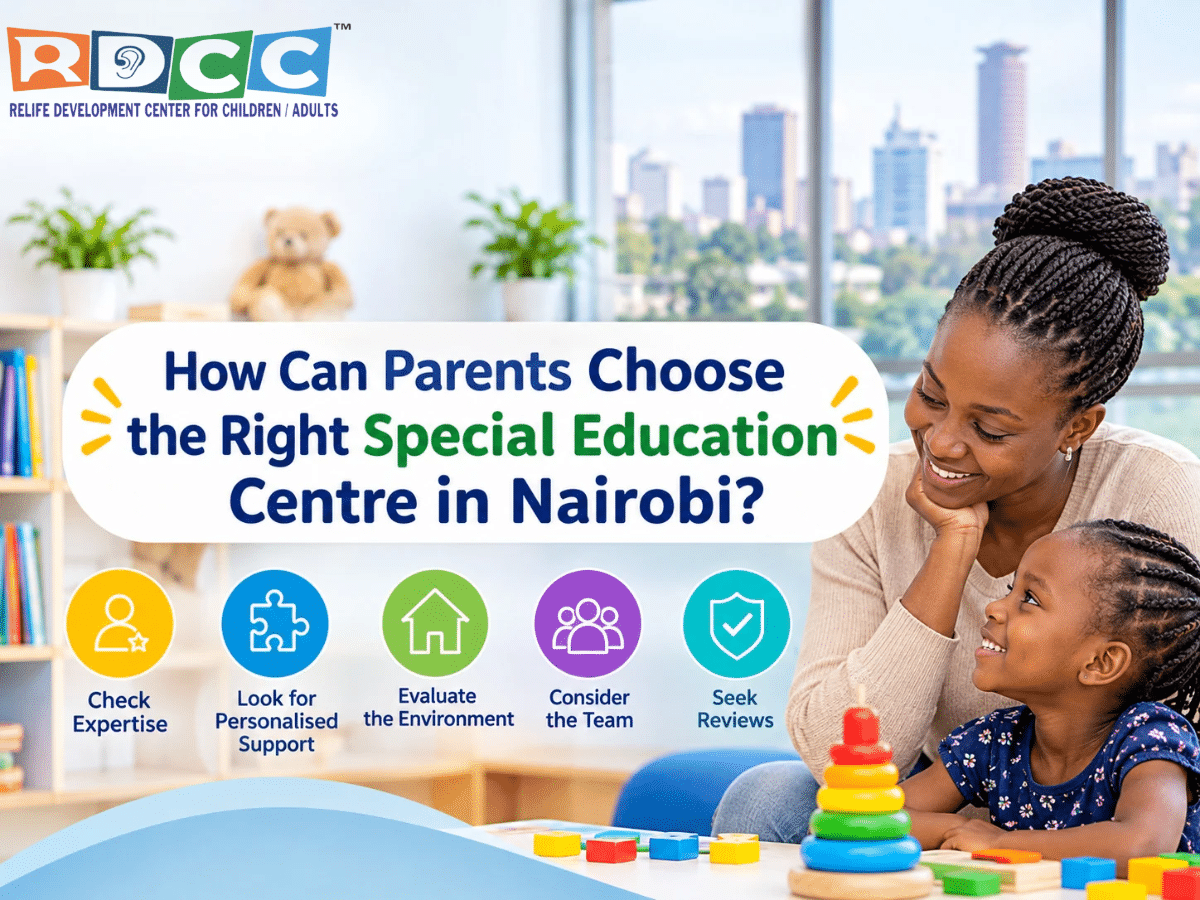
Choosing the right educational environment for your child is an important decision, especially when your child needs additional learning or developmental support. Every child learns differently. Some children may need extra help with communication, while others may benefit from support with social interaction, behaviour, attention or everyday activities.
For parents searching for a Special Education Centre in Nairobi, knowing what to look for can make the decision easier. You may have questions such as: Does the centre understand my child’s needs? Are the learning programmes personalised? Will my child receive individual attention? How can I know if the environment is suitable?
The right support should help children learn at their own pace, develop useful skills and become more confident in everyday situations. Here are some important factors to consider before choosing a special education centre in Nairobi, Kenya.
1. Understand Your Child’s Individual Learning Needs
Before choosing a centre, try to understand where your child needs additional support. Every child has different strengths, challenges and learning preferences.
For example, some children may need support with:
-
Speech and communication skills.
-
Attention and concentration.
-
Social interaction and play.
-
Reading, writing and basic learning.
-
Understanding instructions.
-
Behaviour and emotional regulation.
-
Everyday activities and independence.
Children with autism, ADHD, speech delays, developmental delays or other learning differences may benefit from structured and individualised support.
A centre that takes time to understand your child’s abilities and challenges can help create a more suitable learning approach.
2. Look for Individualised Learning Programmes
One of the most important things to check is whether the centre offers personalised learning plans.
A single teaching method may not work for every child. Some children learn better through pictures and visual activities, while others respond well to practical tasks, repetition, play-based learning or structured instructions.
A suitable special education programme should consider:
-
Your child’s current learning abilities.
-
Individual developmental goals.
-
Preferred ways of learning.
-
Areas where additional support is needed.
-
Progress over time.
Ask the centre how it plans learning activities and whether programmes are adjusted as your child develops new skills.
3. Check the Qualifications and Experience of the Team
The professionals supporting your child play an important role in their learning and development.
When researching a Special Education Centre in Nairobi, ask about the qualifications, experience and roles of the team members.
Depending on your child’s needs, support may involve:
-
Special educators who focus on individual learning needs.
-
Speech therapists who support communication.
-
Occupational therapists who work on daily living and functional skills.
-
Psychologists who help assess developmental and behavioural needs.
-
Other relevant professionals who contribute to the child’s support plan.
A multidisciplinary approach can be helpful when a child needs support across different areas of development.
It is also worth asking how professionals communicate with parents and share updates about a child’s progress.
4. Understand the Teaching Methods Used
Different children respond to different teaching approaches. Before enrolling your child, ask the centre about the methods it uses and how they support different learning needs.
Some approaches may include:
Structured learning: Helps children understand routines, follow instructions and complete activities step by step.
Play-based learning: Uses games and interactive activities to encourage communication, social interaction and problem-solving.
Visual learning: Uses pictures, visual schedules and demonstrations to make instructions easier to understand.
ABA-based support: Applied Behaviour Analysis (ABA) may be used to teach specific skills through structured learning and positive reinforcement, depending on the child’s individual needs.
Practical activities: Help children practise everyday skills such as organising belongings, following routines and completing simple tasks.
The important thing is not simply which method a centre uses, but whether its approach is appropriate for your child’s individual requirements.
5. Consider the Learning Environment
A child’s surroundings can influence how comfortable they feel while learning.
When visiting a centre, observe whether the environment is welcoming, organised and suitable for children with different learning needs.
Look for:
-
Clean and organised learning spaces.
-
Age-appropriate educational materials.
-
A calm and supportive atmosphere.
-
Opportunities for individual and group activities.
-
Safe and accessible facilities.
-
Space for play and practical learning.
Notice how the team interacts with children. Do they communicate patiently? Do they encourage participation? Does the environment allow children to learn without unnecessary pressure?
A supportive atmosphere can help children feel more comfortable and confident.
6. Ask How the Centre Tracks Your Child’s Progress
Parents naturally want to understand whether their child is making progress. That is why regular communication and progress monitoring are important.
Before selecting a centre, ask how it evaluates learning and developmental goals.
A good progress-monitoring process may include:
-
Initial assessment of the child’s abilities.
-
Individual learning goals.
-
Regular observation of activities.
-
Progress reports or parent meetings.
-
Adjustments to learning plans when needed.
Progress does not look the same for every child. One child may begin communicating more clearly, while another may improve in attention, social interaction or daily routines.
Small improvements can be meaningful. Regular updates help parents understand what their child is learning and where further support may be useful.
7. Look for Parent Involvement and Guidance
Parents are an important part of a child’s learning journey. Skills developed during sessions often need practice in everyday situations at home and in the community.
Ask whether the centre involves parents in the learning process and provides practical suggestions for home activities.
For example, parents may be guided on how to:
-
Encourage communication during everyday conversations.
-
Build consistent daily routines.
-
Practise simple instructions.
-
Encourage independent activities.
-
Support positive social interactions.
-
Reinforce skills learned during sessions.
When parents and professionals work together, children can receive more consistent support across different environments.
8. Ask About the Age Groups and Support Available
Not every centre provides the same programmes or supports every age group. Some focus mainly on early childhood, while others may offer learning and developmental support for older children.
Before making a decision, ask:
-
What age groups does the centre support?
-
Does it work with children with autism and ADHD?
-
Is support available for speech and language difficulties?
-
Are individual and group learning sessions available?
-
Can the centre coordinate with therapists when needed?
-
How are programmes adapted as children grow?
Understanding the services available can help you decide whether the centre is suitable for your child’s current and future needs.
9. Visit the Centre Before Making a Decision
Online information can help you create a shortlist, but visiting a centre can give you a better understanding of its environment and approach.
During your visit, consider asking these questions:
-
How do you assess a child’s learning and developmental needs?
-
Are learning plans personalised?
-
What qualifications and experience does the team have?
-
How do you communicate progress to parents?
-
What happens if a child needs support in multiple developmental areas?
-
Can parents observe or understand the learning process?
-
How do you help children develop independence?
Take time to understand the answers rather than making a decision based only on facilities or location.
How Can Special Education Help Children With Different Learning Needs?
Special education focuses on supporting children according to their individual abilities and learning requirements. It can help them practise important skills through suitable teaching methods and structured activities.
Depending on the child’s needs, support may focus on:
Communication skills: Encouraging children to express their thoughts, understand instructions and interact with others.
Social skills: Helping children practise sharing, taking turns, playing and participating in group activities.
Learning skills: Supporting attention, memory, early literacy, basic concepts and problem-solving.
Daily living skills: Encouraging independence with everyday routines and activities.
Emotional and behavioural skills: Supporting children in understanding routines, managing transitions and developing appropriate ways to express their needs.
The purpose is not to compare children or expect everyone to reach the same milestones at the same time. It is to help each child build skills based on their individual potential.
Why Choose RDCC Healthcare for Special Education in Nairobi?
Finding the right learning and developmental support is an important step for families. At RDCC Healthcare, Nairobi, Kenya, children can access support based on their individual developmental and communication needs.
Established in 2009, RDCC Healthcare offers services including Special Education, Speech Therapy, Occupational Therapy, ABA Therapy, Autism Support and other developmental services.
The approach focuses on understanding each child’s needs and supporting progress through suitable activities and professional guidance.
For parents exploring Special Education in Nairobi, understanding the available services and discussing your child’s requirements can help you make a more informed decision.
Every child has their own strengths, learning style and pace of development. With appropriate support, encouragement and consistent involvement from parents, children can continue building skills that are meaningful in their everyday lives.
Frequently Asked Questions
1. How do I know if my child needs special education?
Your child may benefit from special education if they experience difficulties with communication, attention, learning, social interaction or everyday activities. A professional assessment can help identify their support needs.
2. At what age can a child start special education?
There is no single age that applies to every child. Support can begin during early childhood when developmental or learning needs are identified. The appropriate programme depends on the child’s abilities and requirements.
3. Can children with autism benefit from special education?
Yes. Special education can support children with autism through personalised learning activities that focus on communication, social interaction, daily living and learning skills.
4. Is special education only for children with disabilities?
No. Special education can support children with different learning and developmental needs, including autism, ADHD, speech and language difficulties, developmental delays and other learning differences.
5. What is the difference between special education and regular education?
Regular education generally follows a common curriculum for a group of students. Special education adapts teaching methods, learning activities and support according to a child’s individual learning requirements.
6. Can special education improve a child’s communication skills?
Special education can provide opportunities to practise communication through structured activities, visual learning, interaction and play. A speech therapist may also be involved when additional communication support is needed.
7. Where can I find a special education centre in Nairobi?
Parents looking for special education support in Nairobi, Kenya, can explore RDCC Healthcare. The centre offers Special Education along with Speech Therapy, Occupational Therapy, ABA Therapy and other developmental services.

Related Posts

Why Choose the Best Audiologist in Vadodara for Hearing Loss Treatment Options?
Hearing plays an important role in how we communicate, learn, work, and stay connected with…

Pure Tone Audiometry: Everything You Need to Know
Pure Tone Audiometry: Everything You Need to Know Hearing is one of our most important…



